




October 28, 2026 By Dary Fargo “Think of a person who is trapped in a domestic violence relationship and then add addiction and being sold over and over for profit. That is what human trafficking cases look like, and it’s horrific.” Victoria Recore, the mother of a human trafficking victim from Jefferson County, gave that description to a group gathered at Our Lady of the Sacred Heart Church in Watertown on Oct. 15. The event was sponsored by the Commissioned Lay Ministry Association of the Jeferson-Lewis Deanery and focused on the Church’s role in preventing and responding to human trafficking. The event was opened by Sister Bethany Fitzgerald, a Sister of St. Joseph, who noted that
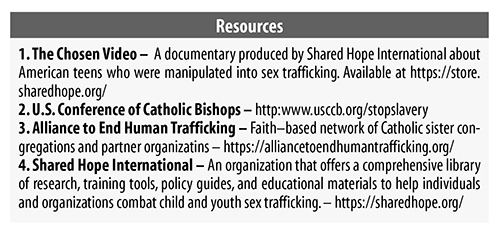
faith communities have worked against oppression and slavery for hundreds of years. “Two centuries ago, if you remember, people of faith are those who raised awareness about the evils of slavery,” she said. “They organized ways to help people and get them to safety – places here in this area were part of the Underground Railroad. Thirdly, they advocated for changing laws. Three things – they raised awareness that slavery is evil, they organized ways to help people and they advocated.” Sister Bethany noted a similar three-pronged approach can and should be used in regards to human trafficking. Anita Seefried-Brown with Alliance for Better Communities said the organization’s interest in human trafficking grew out of its work with individuals in or seeking recovery from substance abuse. “Sitting together in a room, young women were talking about experiences while they were in active addiction, and somehow a light switch turned on,” she said. “They said, well, all this time I was feeling so bad and so gulty because I was doing things that were against my parents’ morals, against my own morals. I was selling myself for dope. No. They did not. They had an illness that created a tremendous craving, particularly for opiates. One moment, they realized others were taking advantage of their illness while they were going into withdrawal – which is a medical condition and can be very dangerous – and exploited them.” Seefried-Brown noted that human traffickers use “force, fraud or coercion” to force others into trafficking for labor, sex or services. The advocate noted traffickers target vulnerable individuals, including those facing homelessness, addiction, poverty, neglect or loneliness, and targets are often identified and groomed through online means. “There’s grooming, relationship building,” she said. “The victim feels like it’s a genuine connection – really like they’re talking to a friend. There may be fake job offers. They may say, ‘you’re so beautiful! You are stunning! You should apply to be a model, ad Vogue will feature you in a centerfold. I will help you get there. You just need to polish up a little.’” Traffickers also prey on feelings of disconnection. “They may say something like, ‘your parents just don’t understand you,’” Seefried-Brown said. “’If they understood you, you’d be so much better off. They don’t see the potential you have. I see it, and I will help you reach it.’” Once the victim relinquishes control to the trafficker, “the ugly phase comes out,” Seefried-Brown said. “It may be threats of violence,” she said. “It may be actual violence. They may threaten the victim’s family.” “My daughter is still in that world,” she said. “I don’t know where she is tonight. I haven’t heard from her in a week now. My daughter was only 15 when she was lured into a trafficking ring here in Watertown by a friend’s older sister. She was sold, beaten and drugged by three men at (age) 15… Her life was robbed by violence, drugs and fear… I have spent countless days and nights without sleep wondering where she is, wondering if she is safe, wondering if I’ll every see her alive again. My family and I have been threatened at gunpoint. I’ve put myself and those I love in many dangerous situations. The times I found her and look at her and think it’s time the nightmare is finally over, she would leave and return to her trafficker. That’s has been one of the hardest things for me to wrap my ahead around – how she could keep going back to these people and causing this pain after everything she’s been through. As I learned more about how traffickers operate, they study vulnerabilities and what (a victim) fears… It may begin with friendship, attention, protection, money, drugs or a promise of belonging. They gain trust, create dependencies with them and separate the victim from those who they love, and they slowly take all control. I came to understand I’m not only fighting the person trafficking my daughter, I’m fighting against vioence, addiction, threats, shame, manipulation and many years of trauma. I could bring my daughter home time and time again, but I couldn’t force her mind to feel free.” Seefried-Brown recommended church communities work to be aware of human trafficking, train clergy and volunteers to recognize and respond to signs of abuse or trafficking and create meaningful opportunities and environments where youth can become safely engaged with the faith community. Recore reiterated those suggestions, also offering simple ways of communicating the willingness to help. “Every church should place human trafficking information on bulletin boards,” she said. “Display the warning signs, trusted local resources, hotline information and a statement that your church supports victims, survivors and effected families,” Recore said. “Churches need trained pastors, ministry leaders and volunteers, partnering with law enforcement, qualified advocates, shelter programs and healthcare providers. Provide food, clothing, transportation, spiritual counseling, addiction treatment, safe housing and support groups for families, as well as prayer groups.” Recore suggested ensuring paper and pens were near the posters so individuals who need the information can copy it down for later use. She also encouraged church communities to teach youth about healthy love. “We must raise a generation that knows Jesus, understands their God-given worth and will recognize counterfeit love,” she said. “Traffickers target insecurity, loneliness, rejection and a desire to belong. Build children’s self esteem and make sure they know the truth of God so they always come back to the word of God.” She noted that helping “is a very long, healing journey.” “We’re all called to be God’s hands and feet,” she added. To learn more about human trafficking, contact Sister Bethany Fitzgerald at srbethssj@gmail.com or use the resources in the box attached to this article. |
||||
|
|||||||||